
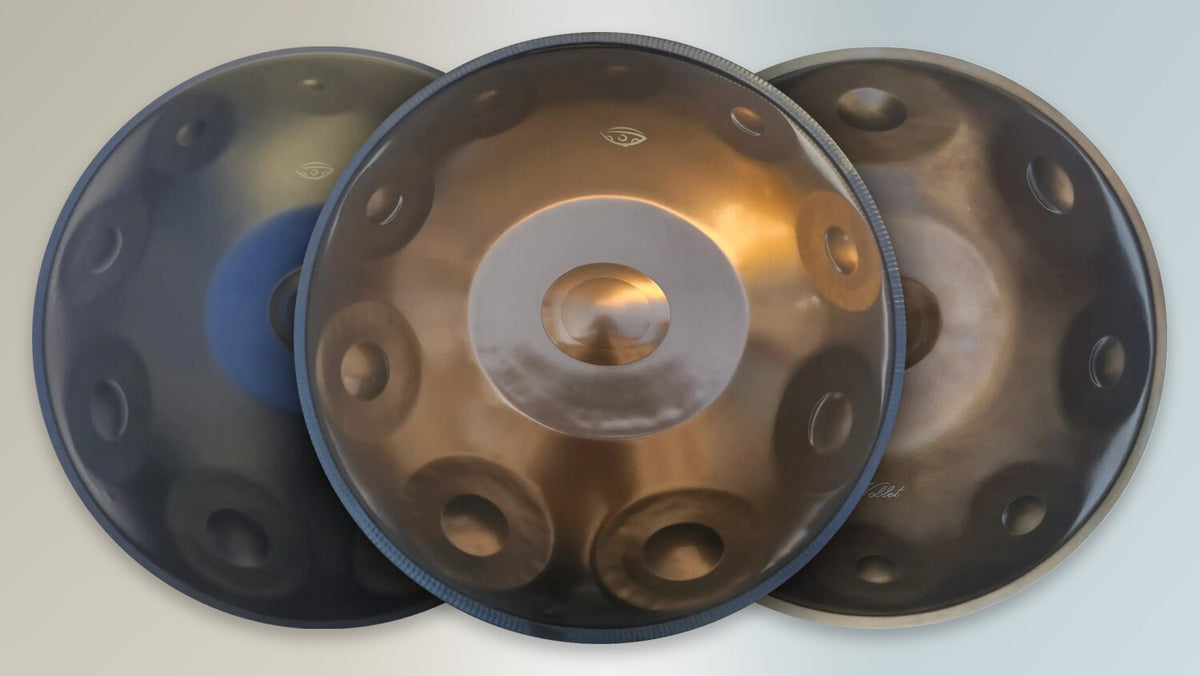
Guide to handpan materials: nitrided vs stainless steel vs Ember Steel
Compare handpan materials. Learn how nitrided steel, stainless steel, and Ember Steel affect sustain, rust resistance, and sound with Sound-Sculpture.

Table of contents
The steel a handpan is made from is one of several things that shape its sound, alongside the scale, the number of notes and the maker. Nitrided steel, stainless steel and Ember Steel each have a distinct character, mainly in how a note begins and how long it rings. None of them is the right choice for everyone, and none of them makes a handpan better or worse: the steel gives it a different voice.
In this guide we explain how each material sounds, where each one comes from, and how to look after it.
Why the material matters, and what it does not decide
A handpan's sound is the result of many things working together: the maker, the scale, the number of notes, the thickness of the steel and the quality of the tuning. The steel is one more layer, and it influences above all the attack and the sustain. That is why two handpans in the same scale can still feel quite different under your hands.
It also means the material is only one part of the decision. If you are still choosing a scale or a first instrument, our handpan buying guide and our complete guide to handpan scales are good places to start. This article is about the steel itself.
A brief history of handpan materials
The evolution of handpan steel spans over two decades of intense metallurgical experimentation. In 2000, Swiss inventors Felix Rohner and Sabina Schärer of PANArt introduced the Hang®, crafted from nitrided steel. Gas-nitriding hardened the metal surface and provided basic corrosion resistance, and it set the acoustic reference for the instruments that followed.
Stainless steel came later and is now widely used by makers, including throughout our own range. It brought a longer sustain and higher passive resistance to rust, which made handpans easier to live with in humid climates and coastal regions.
Ember Steel, a stainless steel developed for handpans by the Dutch shell maker Ayasa, is the most recent of the three. One thing worth knowing: most European makers build their instruments from shells produced by Ayasa, although a few, such as Leaf Soundsculptures and Ugur, make their own material in house.
To follow this story in more detail, read our overview of the origin and history of the handpan.
How the material affects the sound of a handpan
The material influences two things above all: how a note begins and how long it rings. The steel of a handpan is around one millimetre thick, and the exact thickness of each instrument is listed on its product page.
Attack and harmonics
The attack is the very first moment of a note, the instant your hand meets the steel. Stainless steel generally gives a softer attack with more harmonics, the extra overtones that colour a note and make it sound rich and rounded. Nitrided steel is more percussive and defined, so each strike stands out clearly. This is a difference in character, not in quality: neither is a better sound, only a different one.
Sustain and decay
Sustain is how long a note keeps ringing after you strike it. Stainless steel has a long sustain, so notes overlap and blend into one another, which can make slow melodies sound full. Nitrided steel has a shorter sustain, so each note clears away sooner and quick patterns stay distinct. Again, think of it as two different ways of shaping the same music.
Tuning stability
Tuning stability depends strongly on how the instrument is played and handled, above all on how much force is used. Heat plays a role too: a handpan left in the sun is more likely to drift out of tune, though it will usually settle again once it returns to room temperature.
Any handpan can lose a little of its precision over the years, which is normal rather than a fault. There is no fixed schedule for this: some players go a long time without needing anything, others notice a drift after a season of heavy playing. When it happens, our handpan retuning service brings the instrument back to its original tuning.
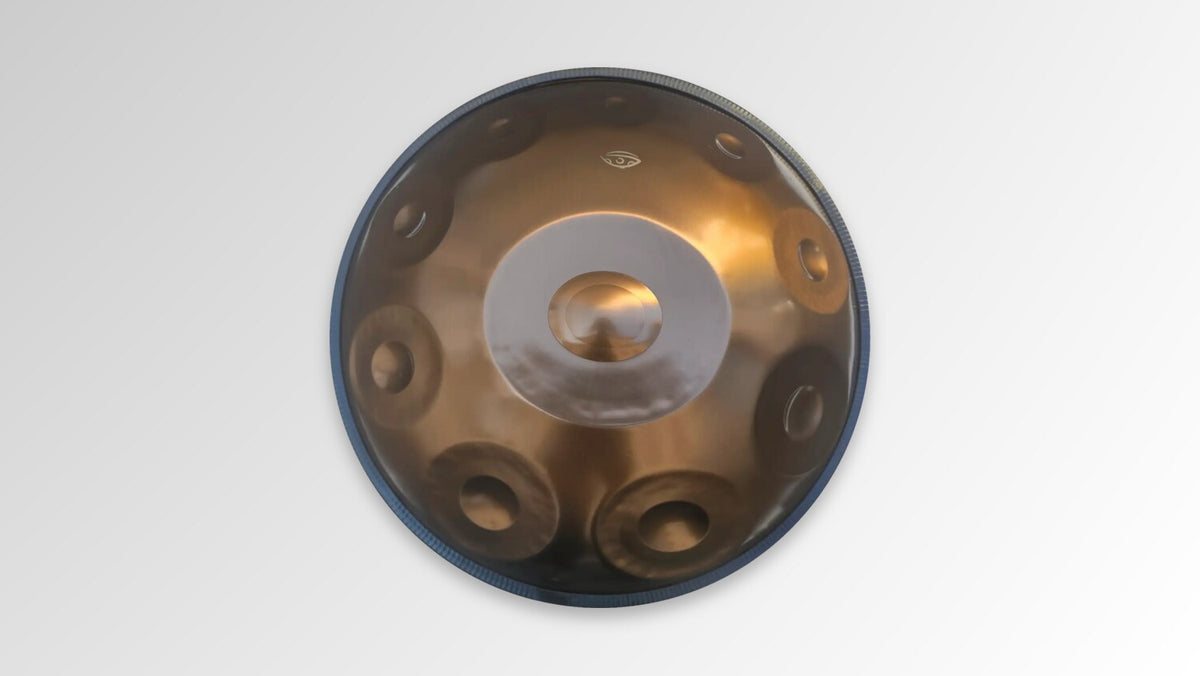
Stainless steel: long sustain and open resonance
Stainless steel is widely used by handpan makers today. Its chromium content gives it good passive resistance to rust alongside its acoustic qualities.
Browse our stainless steel handpan collection to hear these properties in action.
How stainless steel sounds
The sound of stainless steel combines a soft attack, rich harmonics and a long sustain. Notes ring and blend into one another, so harmonies build up gradually and the sound fills the space around you.
Ideal playing styles
The extended sustain suits slow, expressive playing, which is why it is popular with ambient musicians and with players who work in meditation and sound settings. Light finger touches and soft palm strikes are rewarded, because the instrument responds to very little input.
The trade-off is the other side of the same quality: very fast percussive passages can blur, because notes are still ringing when the next ones arrive.
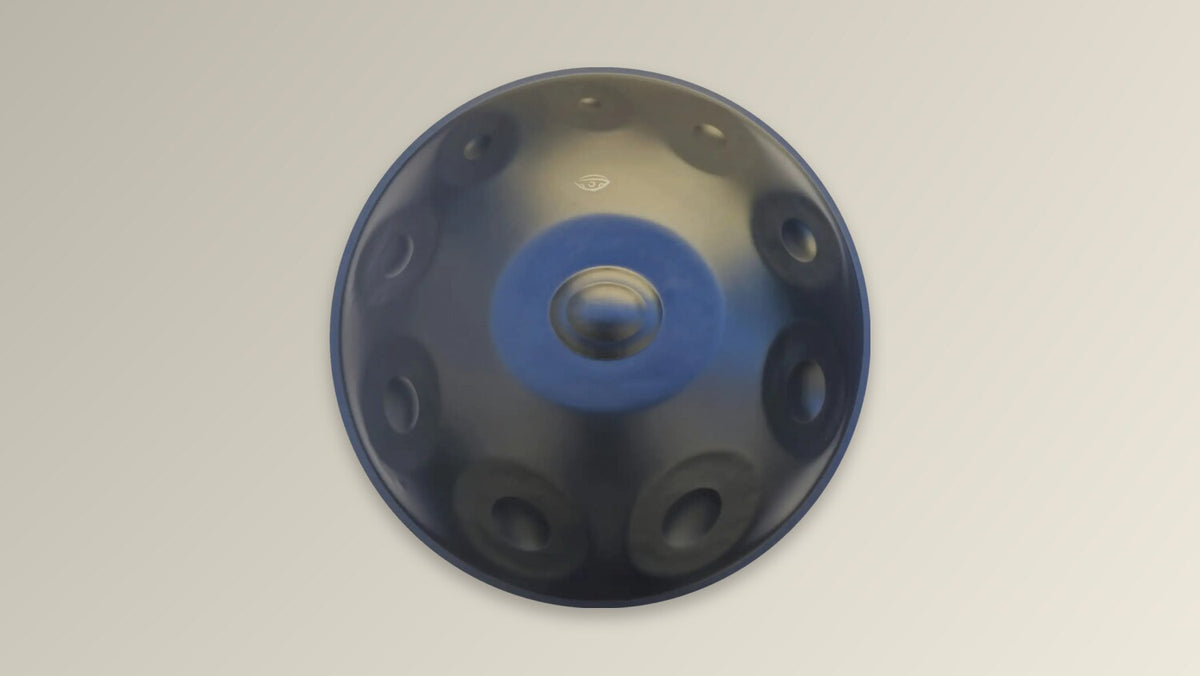
Nitrided steel: the original handpan material
Nitriding is a thermochemical treatment: nitrogen diffuses into the surface of the steel, hardening it and creating a surface that is very resistant to corrosion. Nitrided steel is the material of the original Hang®, and it remains the reference for the classic handpan sound.
Explore our nitrided handpan collection to discover these classic instruments.
How nitrided steel sounds
Nitrided steel has a drier, more percussive sound with a crisp, defined attack. Its shorter sustain keeps each note separate, so rapid passages stay clear and every strike has its own place. The fundamental stays prominent, which keeps the sound focused and grounded.
Ideal playing styles
The shorter sustain makes nitrided steel a natural fit for fast, rhythmic playing. Players who use slaps, ghost notes and sharp accents benefit from the clear separation between notes, because nothing is left ringing to cloud the next phrase.
Ember Steel: the next-generation handpan alloy
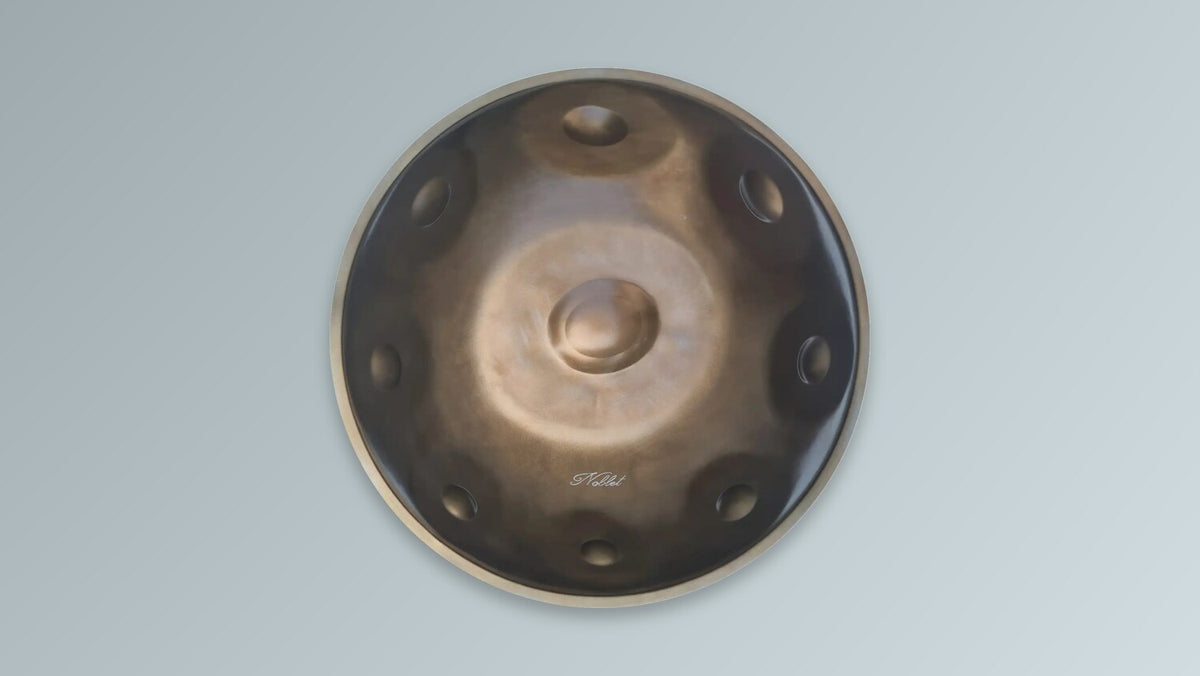
Ember Steel is a commercial name rather than a standard metallurgical category. It refers to a stainless steel developed for handpans by Ayasa, which supplies shells to most European makers.
View our Ember Steel handpan collection to experience this modern material.
How Ember Steel sounds
Being a stainless steel, Ember Steel shares the long sustain of other stainless instruments, so notes ring on rather than clearing away quickly. Its maker describes the sustain as more controlled and rounded than standard stainless, with the shoulder tones of each note slightly less present.
Its exact character depends heavily on who built the instrument. The shells come from a single supplier, so the differences you hear between two Ember Steel handpans come from the maker's shaping and tuning rather than from the steel itself.
What Ember Steel looks like
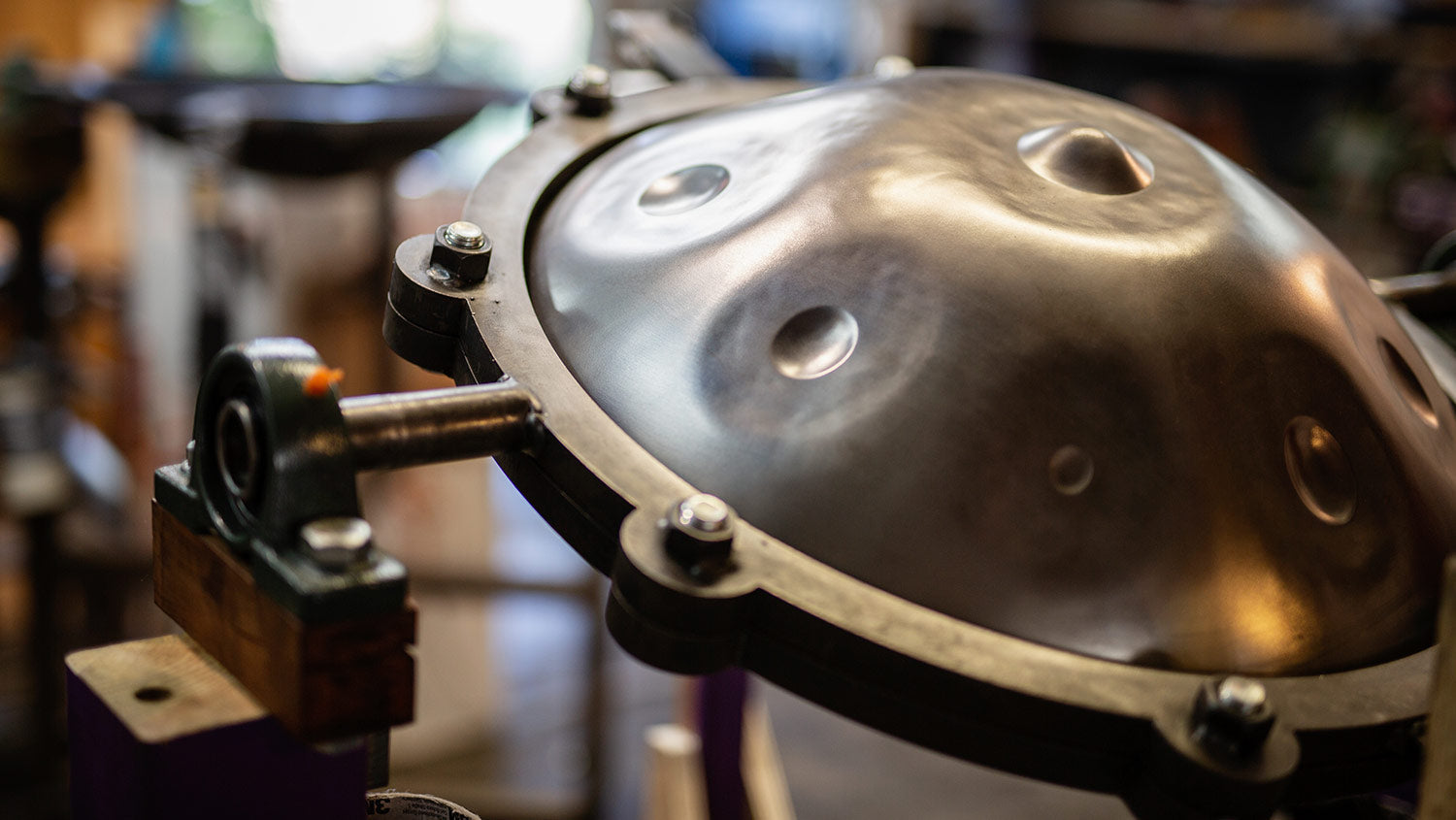
This is the most visible difference between the three materials and it is worth knowing before you buy. Ember Steel develops a patina that ranges from golden through reddish brown to deep purple, depending on how the steel was treated. That patina continues to shift and deepen over the years. It is part of the material and has no effect on sound or tuning.
Ideal playing styles
As a stainless steel with a long sustain, Ember Steel lends itself to slow, melodic playing, in the same way as other stainless instruments. Beyond that, how a specific Ember Steel handpan behaves depends on the maker, so if one appeals to you, contact us and we will tell you more about that particular model.
Side-by-side comparison: nitrided vs. stainless vs. Ember Steel
Comparing key technical metrics helps identify which material fits your budget, environment, and playing style:
| Feature | Nitrided Steel | Stainless Steel | Ember Steel |
| Attack | Crisp, percussive, defined | Softer, more harmonics | Varies by maker |
| Sustain | Shorter | Long | Long, described as more controlled |
| Appearance | Dark grey to black | Bright, metallic | Golden to red or purple patina, deepens over time |
| Suited to | Fast, rhythmic playing | Slow, melodic playing | Depends on the instrument |
| Care | Wipe after playing, oil once or twice a month | Wipe after playing, oil once or twice a month | Wipe after playing, oil once or twice a month |
Caring for your handpan
The steel you choose says little about how much care the instrument needs. Nitriding hardens the steel and creates a surface that is very resistant to corrosion, and stainless steel resists rust through its chromium content, but neither is maintenance free: both react to sweat and moisture. The real difference between them lies in sound and sustain, not in how easy they are to look after.
For all three materials the routine is the same. After playing, wipe the whole surface with a dry microfibre cloth to remove sweat before it has time to react with the steel. Then, once or twice a month in normal conditions, apply a thin layer of specialist handpan oil with a clean cloth and buff away any excess, so the surface is protected rather than greasy. Oil more often if you play outdoors, travel frequently or live somewhere humid.
For a complete step by step walkthrough, consult our guide on how to clean a handpan.
Hear the difference before you decide
The surest way to understand the materials is to spend time with the instruments themselves, and we make that easy: you can rent a handpan for 15 or 30 days. If you keep it, the price of up to two rental periods is deducted from the purchase price.
And if you are unsure where to start, contact us: tell us the kind of music you want to play and we will point you towards the materials and models that fit.
Frequently asked questions about handpan materials
None is better or worse for a beginner, and the choice comes down to the sound you prefer. The one practical difference worth knowing is that a long sustain is forgiving of an uneven touch, because notes blend together, while a shorter sustain exposes every strike more clearly. Listen to demos of each before deciding. Our handpan buying guide covers the other choices involved in a first purchase.
Nitriding is a thermochemical treatment that hardens the steel and creates a surface that is very resistant to corrosion. The real difference between nitrided and stainless steel lies in sound character and sustain, not in how easy they are to look after. Neither is exempt from care: wipe the instrument after playing and oil it once or twice a month.
The material shapes the sound, not how hard you may play. On any handpan, tuning stability depends largely on how it is played and handled, in particular on how much force is used, so a controlled touch is a good habit whatever the steel.
No. The colour shifts and deepens over time, which is a normal property of the material. It has no effect on the sound, the sustain or the tuning.
In short
Nitrided steel offers a more percussive, defined sound with a shorter sustain. Stainless steel gives a softer attack, more harmonics and a long sustain. Ember Steel, a stainless steel developed by Ayasa, shares that long sustain with a character that varies from maker to maker. All three are cared for in the same way, and none is better than the others.
So trust your ears, compare the same scale in different materials if you can, and take advantage of our rental options. If you would like personal advice, our team is here to help you find the handpan that feels right.

About the author

Founder and managing director of Sound-Sculpture, handpan expert
Related articles

The complete guide to handpan playing techniques for beginners
Master the best handpan playing techniques. Learn proper striking methods, touch styles, sound effects, and daily practice exercises with Sound-Sculpture.

The ultimate guide to travelling safely with your handpan
Learn how to travel safely with your handpan. Discover airline carry-on tips, flight hard cases, temperature protection, and humidity care with Sound-Sculpture.
Handpan tuning: how does it work?
Discover how a handpan is tuned: expert techniques, high quality tools and all you need to understand how your instrument has been built or can be restored!

Handpan musicians: 10 artists redefining the instrument
Discover 10 handpan musicians pushing the boundaries of this remarkable instrument, from viral pioneers to UK street performers shaping the modern scene!