
Handpan vs tongue drum: choosing the right instrument
Discover the differences between handpans and steel tongue drums. Find out which is best for you based on sound, cost, and more.

Table of contents
In the evolving landscape of modern percussion, two instruments have captured the global imagination like no others: the handpan and the steel tongue drum. While they may appear similar to the untrained eye - both being metallic, circular vessels that produce ethereal, melodic sounds - they belong to distinct families of craftsmanship and acoustic science. These instruments have moved beyond the niche circles of street performers and "New Age" enthusiasts to become staples in professional recording studios, yoga retreats, and living rooms worldwide.
The rise in popularity of these "vessel drums" stems from their accessibility. Unlike a violin or a piano, which require years of technical study to produce a pleasant tone, both the handpan and the tongue drum offer immediate acoustic gratification. However, the difference between handpan and tongue drum is significant, affecting everything from the price tag to the physical technique required to make them sing. No matter if you are a professional musician or someone looking for a meditative outlet: understanding these nuances is essential to making an informed investment.

What is a handpan?
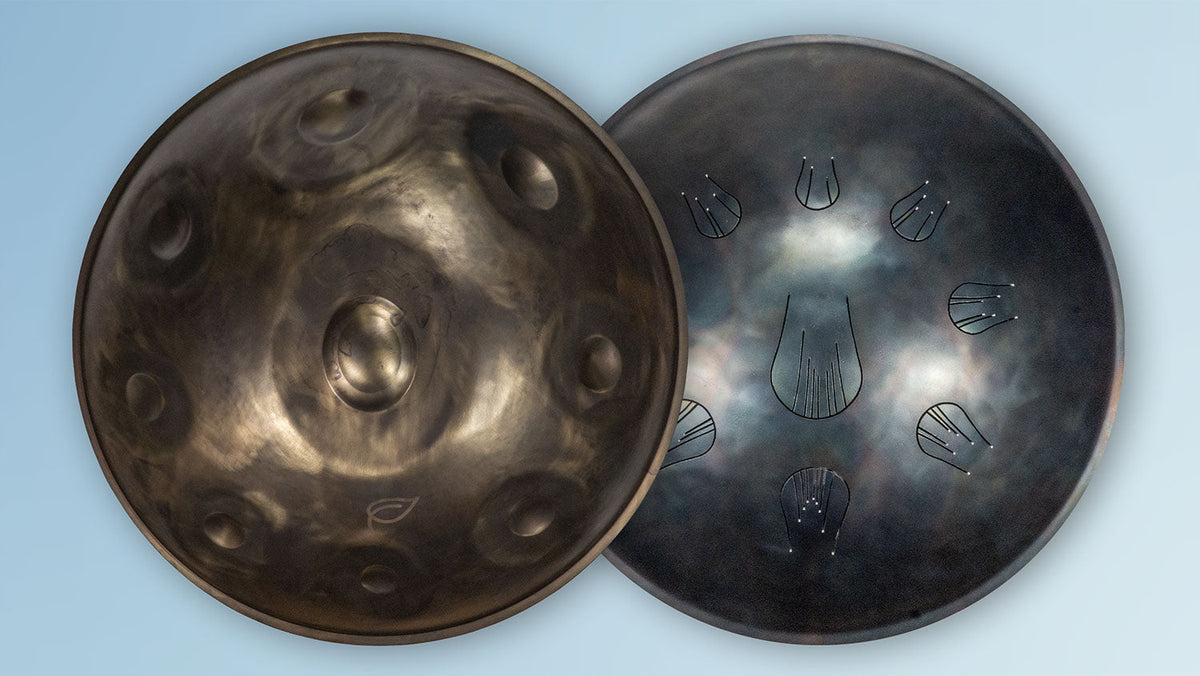
A handpan is a melodic percussion instrument constructed from two deep-drawn, thin sheets of steel glued together at the rim. The top half features a central note, called Ding, surrounded by a circle of at least seven or eight additional note fields. Each of these fields is created through intensive manual labor, involving thousands of precisely placed hammer strikes to create the necessary tension for resonance.
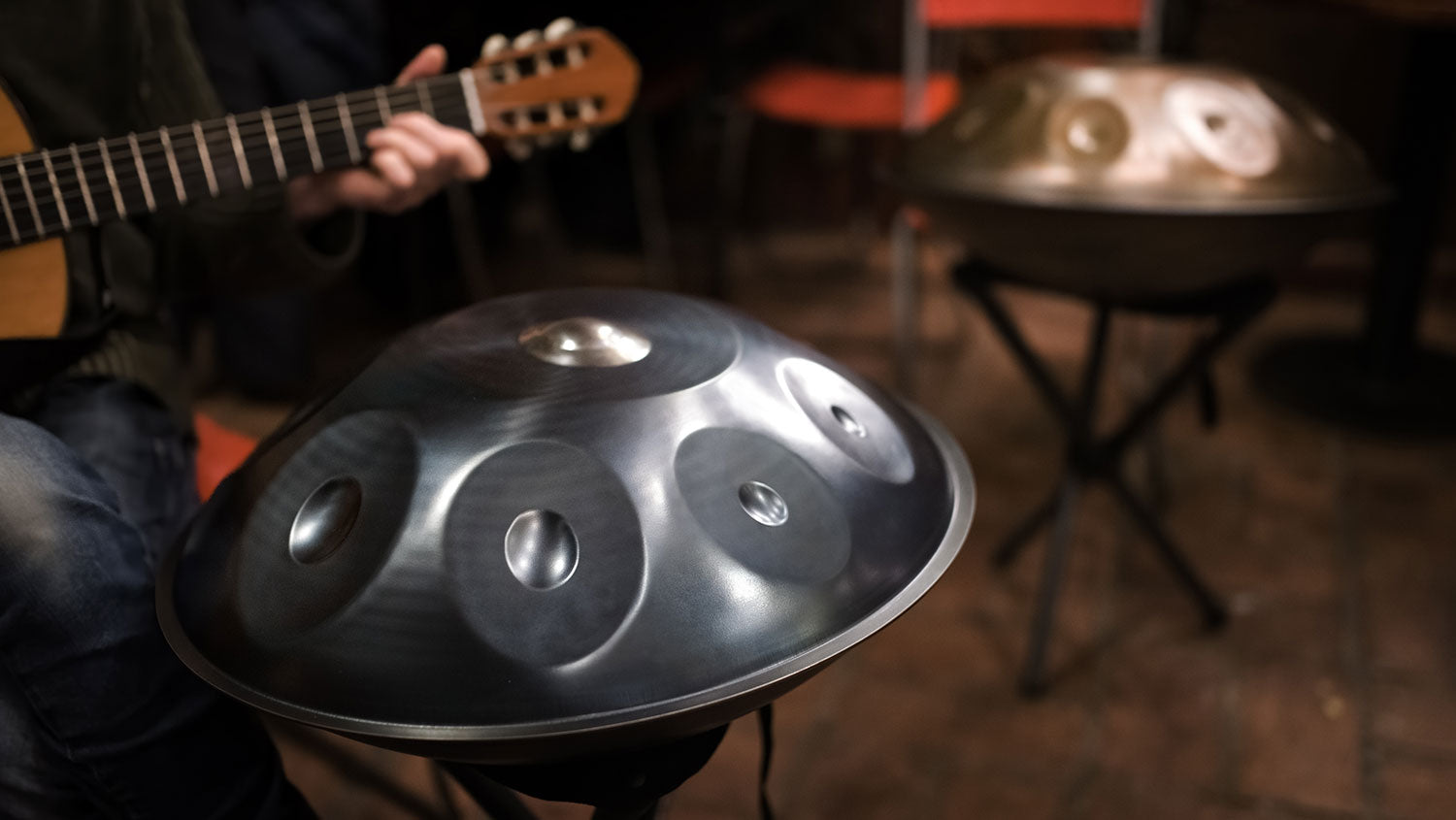
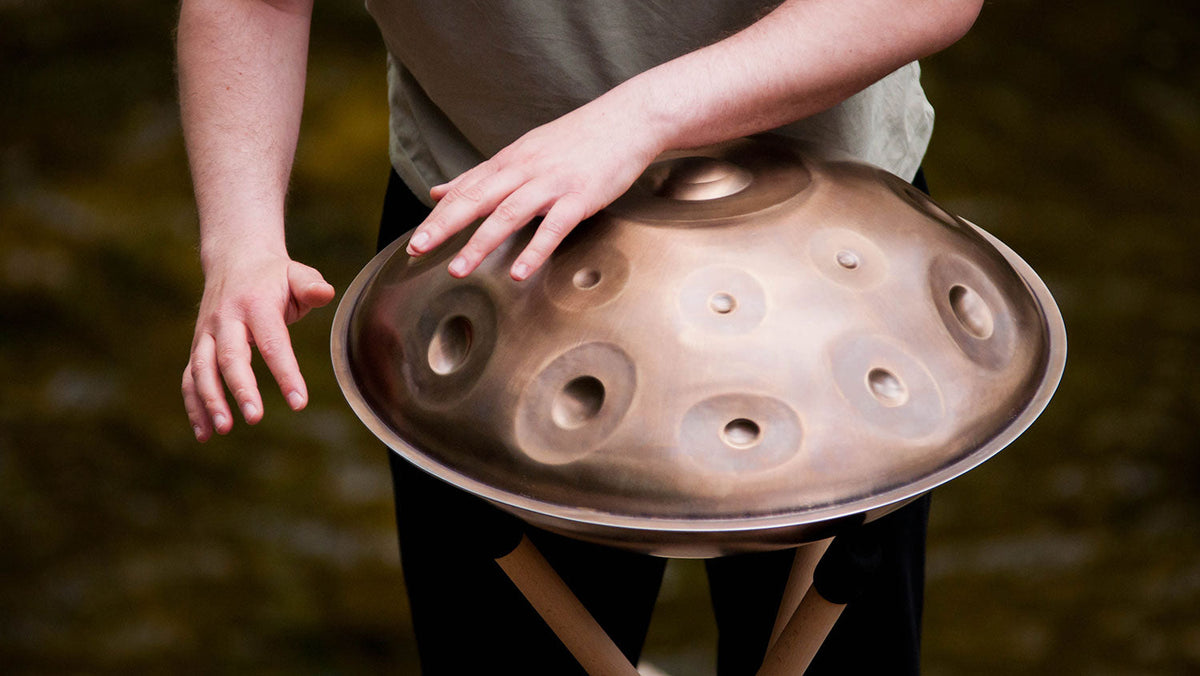
Often referred to as a body instrument because it is typically cradled in the lap and played directly with the soft pads of the fingers, the handpan is prized for its immense volume, sensitive touch, and hauntingly beautiful sustain.
Looking for a comprehensive guide about handpan? Don’t miss our handpan guide!

What is a tongue drum?
The steel tongue drum, sometimes also called tank drum, is a slit drum made from a heavy steel shell. Unlike the handpan, which relies on tension and hammered note fields, the tongue drum produces sound through tongues, or slats, cut into the steel. When a tongue is struck - typically with a mallet - it vibrates at a specific frequency determined by its size, weight, and length.
Originally inspired by the african whale drum and traditional wooden slit drums, modern tongue drums are often made from thick, pressurized steel. They are generally smaller, more robust, and more affordable than handpans, making them a popular entry point for rhythm enthusiasts.
Sound and acoustic comparison
The most striking difference between handpans and tongue drums lies in their acoustic profile. While both are idiophones (instruments where the body itself vibrates to create sound) the physics of how that sound is generated and projected varies wildly.
Sound characteristics of handpans
The handpan is famous for its zing - a bright, metallic, yet incredibly warm sound that fills a room. Each note on a high-quality handpan is a tuned overtone masterpiece. When you strike a single note field, you aren't just hearing one frequency; you are hearing a fundamental tone layered with octave compound harmonics and a tuned fifth. This creates a "3D" sound that feels as though it is swirling around the player.
Because the steel is thin and under high tension, the handpan is incredibly responsive. The slightest tap produces a loud, resonant note. This sensitivity allows for a wide dynamic range, from whisper-quiet melodies to loud, percussive slaps on the shoulder of the instrument. Handpans are typically tuned to specific scales (like Celtic Minor, Hijaz, or Integral), which makes them perfect for emotive, cinematic music and deep sound healing.
Sound characteristics of tongue drums
In contrast, the steel tongue drum offers a more "contained," bell-like tone. Because the steel used in tongue drums is significantly thicker than that of a handpan, it possesses a much longer sustain but a slower attack. The sound is often described as meditative, mellow, and "dreamy".
While a handpan can sound aggressive if played too hard, a tongue drum remains consistently sweet. However, they lack the complex octave compound harmonics found in expensive handpans. The sound is "pure" but flatter. This makes tongue drums excellent for layering rhythms in a recording or providing a steady, calming pulse for therapy sessions without the acoustic complexity that might distract a listener.
Worth mentioning: the sustain of a steel tongue drum is longer than from a handpan.
Playing techniques and learning curve
When deciding between a tongue drum or handpan, you must consider how you want to interact with the instrument physically.
- The handpan touch: playing a handpan is an art of touch and release. You must strike the steel quickly and pull your finger away instantly to let the note breathe. If you leave your finger on the steel too long, you dampen the vibration. It requires a certain level of finger dexterity and finesse.
- The tongue drum versatility: tongue drums are much more forgiving especially when they are played with rubber-tipped mallets, which produce a clear, loud tone with zero effort. While you can play them with your hands, the thickness of the steel means you have to strike much harder than you would a handpan to get the same volume.
For a complete beginner, the tongue drum has a shallower learning curve. You can pick up the mallets and sound like a pro in minutes. The handpan takes a few days (or weeks) just to develop the "handpan touch" to make sure the notes aren't muted. Playing with hands will offer much more playing possibilities as when using with mallets.
Musical range and complexity
In the world of drums, handpans are considered the virtuoso choice. Because of their sensitivity, they allow for advanced techniques like ghost notes, percussive tak sounds on the rim, and harmonic isolation. You can play very fast, intricate melodies that would sound "muddy" on a tongue drum due to the latter's long, overlapping sustain.
The musical range of a handpan is also typically wider. While a standard tongue drum might have 8 to 10 notes, advanced mutant handpans can have 30 or more notes, including bottom notes that allow for multiple scales on a single instrument. If your musical ambition involves complex composition or performing on stage, the handpan offers more room to grow.
Difference in size, portability and durability
Physicality is a major practical consideration.
Size
Handpans are large, 50-55cm of diameter on average - but it varies depending on the model. There are also very few smaller handpans in the market, usually with less number of notes.They require dedicated, padded backpacks for transport. Tongue drums are often much smaller, ranging from 10cm to 50cm, fitting easily into a standard backpack.
Portability
If you plan on hiking with your instrument or traveling frequently by plane, the tongue drum wins hands down. It is a compact and much less fussy about hot it is handled. Due to its thicker steel they can be heavier though, espiecially those with a diameter of around 50cm.
Durability
This is a pivotal difference between handpans and tongue drums. Handpans are delicate. Because the notes are held in place by tension, a hard knock or a drop can knock it out of tune, requiring an expensive trip back to the maker for retuning. On the contrary, tongue drums are tanks. The thick steel and cut-out tongues are very difficult to knock out of tune, making them ideal for travel, outdoor use and children.
Cost and availability considerations
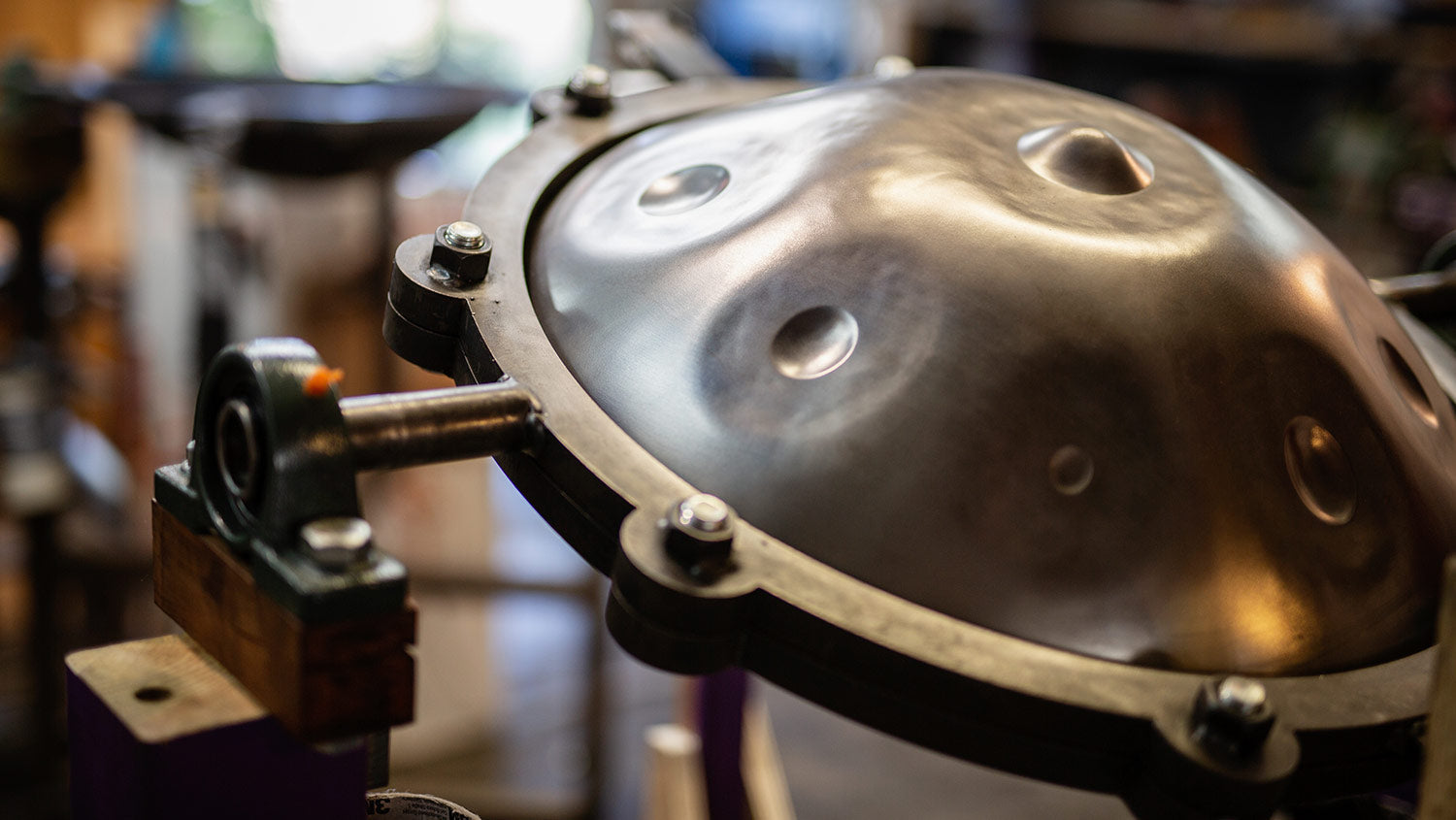
There is no sugar-coating it: expensive handpans can be a shock to the budget. A high-quality, artisan-made handpan typically costs between 900 € and 5,000 €, with some rare models going even higher. This is because they are handmade: a maker spends weeks on the hammered indentations to ensure every tuned overtone is perfect.
On the other hand, even an expensive tongue drum will rarely exceed 900 €, with many excellent models available for under 400 €. Because tongue drums can be laser-cut and mass-produced (though the best ones are still hand-tuned), the labor cost is significantly lower.
Choosing the right instrument for you
The choice ultimately comes down to your "musical soul."
If you have your heart set handpan style, you will likely find a tongue drum disappointing. The handpan is an emotional experience; the way the vibrations travel through your lap (as a body instrument) creates a physical connection that a tongue drum, often played on a stand or a table, cannot match. If you want to perform, busk, or record professional melodic tracks, save up for the handpan.
However, if you are looking for a tool for personal meditation, a gift for a friend, or a "worry-free" instrument you can take to the beach or a drum circle, the steel tongue drum vs handpan debate leans toward the tongue drum. Its durability and price point make it a stress-free companion.
Tongue drum or mini-handpan for children?
For children younger than 8 years old, we almost always recommend a steel tongue drum. Handpans are too delicate for the "enthusiastic" striking style of a child, and their size can be overwhelming for small laps. A tongue drum with mallets allows a child to explore rhythm and melody instantly without the risk of damaging a high-price instrument.
If you really want the handpan sound for a younger player, you can look into mini-handpans (around 47cm).
Final comparison table
To help you decide, here is a summary of the key differences:
| Feature | Handpan | Tongue Drum |
| Primary Playing Style | Hands and fingers | Mallets and hands |
| Sound Profile | Rich, complex, layered harmonics | Bell-like, pure, mellow |
| Acoustics | Octave compound harmonics | Fundamental tones |
| Durability | Delicate; needs retuning if bumped or if it loses tension | Very high; "tank-like"; not sensitive to cold or heat |
| Price Range | 900 € – 5,000 € | 400 € – 900 € |
| Portability | Large; requires protective case | Small to medium; very portable |
| Learning Curve | Moderate | Easy (if played with mallets) |
| Best For | Professionals, buskers, deep meditation | Kids, travel |
While both instruments offer a gateway into the world of resonant percussion, there is an undeniable magic in the handpan that a tongue drum simply cannot replicate. If you are looking for an instrument that feels like an extension of your own body, then the handpan is the clear winner.
The investment in expensive handpans is not just about the steel; it is an investment in a handcrafted piece of art where every hammered indentation is tuned to perfection. The sheer acoustic power of octave compound harmonics creates an immersive experience that can turn a simple living room into a concert hall and a moment of stress into a deep meditative journey.
Discover all of our handpans for beginners to find out how your new musical journey will start!

About the author

Founder and managing director of Sound-Sculpture, handpan expert
Related articles
Handpan tuning: how does it work?
Discover how a handpan is tuned: expert techniques, high quality tools and all you need to understand how your instrument has been built or can be restored!

Handpan musicians: 10 artists redefining the instrument
Discover 10 handpan musicians pushing the boundaries of this remarkable instrument, from viral pioneers to UK street performers shaping the modern scene!
Letter notation vs Solfege: a guide for the modern music
Confused by Do-Re-Mi vs A-B-C? Discover the differences between solfege and letters, their history, and why handpan players prefer one over the other.
Major scale vs minor scale: the complete beginner's guide
A guide for beginners on major scale vs minor scale: learn how their patterns work and which one suits your handpan playing style.