

The complete guide to handpan playing techniques for beginners
Master the best handpan playing techniques. Learn proper striking methods, touch styles, sound effects, and daily practice exercises with Sound-Sculpture.

Table of contents
Hearing a handpan for the first time tends to stay with you. Part of the instrument's appeal is how welcoming it is: because every note on a given handpan belongs to the same scale, most of what you play sounds pleasant from the very first session, without years of study. That makes early exploration genuinely rewarding in a way few instruments manage.
That said, there is a difference between making a pleasant sound and playing with a consistently warm tone and real expression. Getting there takes a mindful approach to technique. This guide is written for complete beginners and takes you from your first touch through to your first rhythmic grooves.
What is a handpan and how does it make sound?
A handpan is made of two steel shells joined at the rim. The upper shell carries the central bass note, the Ding, surrounded by oval tone fields. The lower shell has an opening called the Gu, and the cavity between the two shells acts as a resonator.
Each tone field is shaped and tuned so that it sounds a fundamental note together with its octave and a compound fifth above. Where you strike a note influences which of these overtones ring out, which shapes how warm or bright the note sounds. That is why touch matters so much on this instrument, and why the same handpan can sound quite different in two pairs of hands.
To explore different handpan architectures and scales, consult our comprehensive guide to handpans and how to choose one.
Setting up: posture, positioning, and looking after your instrument
A comfortable, well-aligned setup is the foundation of a good session. Good posture protects you from strain, frees your shoulders for fluid movement and lets the instrument vibrate freely. Whether you play sitting with the handpan on your lap, resting on a chair, or standing with a padded stand, your alignment shapes both your comfort and your tone.
Playing seated with the handpan on your lap
The classic and most intimate way to play is seated, with the instrument resting on your lap. Sit near the edge of a sturdy, armless chair with your feet flat on the floor, hip-width apart. Rest the rim of the handpan on your upper thighs and angle the top shell slightly towards your chest. That small tilt lets you reach every tone field without hunching your shoulders.
One trade-off worth knowing: your legs cover part of the lower shell, which reduces how much the instrument projects. If you want more volume, a handpan stand is the answer.
Hands and wrists
Keep your wrists straight but flexible, avoiding steep downward angles that compress the tendons. Your forearms should stay relaxed and roughly parallel to the angle of the instrument. Tension in the arms slows your fingers, dampens the resonance of the steel and, over long sessions, is what leads to strain.
A few habits worth avoiding
Handpans are hand-crafted acoustic instruments and benefit from a little care:
- Rings and jewelry: take off rings, bracelets and watches before playing. Metal on metal scratches the surface.
- Fingernails: long nails produce a hard clicking sound and can mark the steel. Keep them short if you play often.
- Hard objects: do not play a handpan with drumsticks, mallets or other hard objects, and take care to avoid accidental knocks. Playing normally with your hands, even energetically, does not harm the instrument or its tuning. The real risks are hard objects and knocks, not your hands.
To understand what happens when an instrument does need attention, see our guide to how handpan tuning works.
The foundational strike: getting a clean, resonant tone
The single most useful shift in thinking is this: you do not push sound into a handpan, you draw sound out of it. Beginners often approach it like a drum, hitting down into the surface and leaving the fingers resting on the steel. That traps the sound. Learning to release the steel is where good tone begins.
Which part of the finger to use and why
For a warm, rounded note, a reliable starting point is the soft pad of the index or middle fingertip, just below the fingerprint. Striking with the bony tip of the finger or the edge of a nail produces a thin, metallic click that covers the warmth of the note.
This is a starting point rather than a rule. Experienced players use fingertips, thumbs, palms and knuckles, and part of learning the instrument is discovering which contact point gives you which sound.
The rebound principle: letting the steel sing
Think of your striking finger as a ball bouncing off a hard floor. The instant your fingertip touches the steel it should spring back up. If the finger lingers, your skin acts as a dampener, cutting the sustain short before the overtones have a chance to develop.
Core techniques to start with
Melodic notes, percussive textures, muted accents and bass notes combine to turn simple strikes into music. These are approaches to build up over time, not rigid rules, and experienced players combine them in very personal ways. The table below outlines five techniques that are a good place to start:
| Technique | Contact point | Sound | Common mistake |
| Single finger strike | Soft pad of index or middle finger | Clean, resonant note | Leaving finger on the steel |
| Slap | Side of thumb or flat of finger pad | Sharp, dry percussive crack | Striking much harder than needed |
| Ghost note | Very light fingertip tap | Subtle rhythmic texture | Playing too loudly |
| Muting | Heel of the palm or unused fingers | Shortened sustain, crisp articulation | Pressing the whole palm down and killing the resonance |
| Ding strike | Side or pad of the thumb | Deep bass note | Striking with the joint rather than the pad |
Single finger strikes
Start by isolating your index finger, playing soft, consistent rebound strikes on one tone field until the note rings clearly. Once that feels natural, switch to the middle finger and match the same volume and tone. Alternating cleanly between the two builds the independence you need to play fast passages without swinging your whole arm.
The slap
While finger strikes carry the melody, the slap adds rhythm. You play it with a quick wrist snap on the un-tuned steel between tone fields, or on the outer rim of a note. It gives a dry, punchy sound with almost no sustain, working rather like a snare in a groove and keeping the tempo moving.
Ghost notes
Ghost notes are very soft taps on the un-tuned steel between the primary notes. Rather than carrying a clear pitch, they fill the gaps within a bar, adding a quiet pulse under the melody. They are what gives a groove momentum without covering the notes that matter.
Muting
Because handpans have a lot of natural sustain, fast passages can blur. Muting means resting a finger, the edge of your wrist or the heel of your palm lightly against a vibrating tone field, either just before or just after striking it. Cutting the decay short gives you a crisp, staccato effect and much more control over note length.
Playing the Ding
The ding is the central note on the upper shell and the lowest note of your scale. Because of its size and position it asks for a different touch. Strike it with the fleshy side pad of your thumb in a sweeping, outward stroke. Done well, it gives a deep bass note that grounds your phrases.
Making musical sense of the layout
Most handpans are tuned to a single scale, so nearly everything you play fits together. A few neighbouring notes, such as A and Bb on a D Kurd, sound tense when played together, but you will hear that as you explore. For the most part you can focus on touch, rhythm and expression rather than worrying about wrong notes.

How the layout eases the fear of mistakes
On most instruments, avoiding sour notes takes years of scale practice. On a handpan tuned to a popular scale such as D Kurd, most combinations of notes sound pleasant in almost any order. That frees your attention for the things that actually shape your playing: touch, timing and dynamics.
To explore scale options and the moods they create, see our complete guide to handpan scales, or read our guide to the D Kurd scale.
Playing a simple melody: a step-by-step exercise
To help your hands map out the layout of your instrument, try this:
- Strike the Ding (1) with your right thumb
- Move to Note 2 with your left index finger
- Alternate hands as you ascend the zigzag pattern: Note 3 (Right), Note 4 (Left), Note 5 (Right)
- Pause on Note 5, then descend backward step-by-step down to the Ding to complete a balanced melodic phrase
Developing rhythm
Melodies arrive quickly on a handpan. Rhythm takes longer, and it rewards patient, structured practice. Many beginners find that basic rhythmic confidence develops over the first few months of regular playing.
Alternating hands: the foundation of a fluid groove
Strict hand alternation is the most useful habit for building speed and a fluid groove. Practise a simple right-left-right-left pattern across two neighbouring tone fields with a metronome at 60 BPM. Focus on making every strike identical in volume and clarity, so your weaker hand sounds as confident as your stronger one.
Your first groove pattern
Once alternation feels comfortable, you can begin combining tonal notes, slaps, and ghost notes into a repeatable 4-beat musical pattern:
- Beat 1: deliver a warm, resonant strike on the central Ding with your thumb.
- Beat 2 : execute a crisp, dry slap on the neutral steel shoulder with your dominant hand.
- Beat 3: play a whisper-soft ghost note tap on the un-tuned steel to keep the tempo moving.
- Beat 4: finish the bar with a clean, singing tonal strike on tone field 3 before looping back to beat 1.
Play it slowly until it is even, then gradually bring the tempo up. Evenness first, speed second: a slow groove played cleanly sounds far better than a fast one played unevenly.
Expressive techniques to grow into: harmonics, glissando, and dynamics
Once the basics feel natural, usually after a good while of playing, you may want to widen your range of sounds. These touches add ambient textures and shimmering effects.
Harmonics: unlocking the handpan's upper register
Harmonics are high overtones that sound like a bell or a flute. Rest the soft pad of a finger very lightly at the midpoint of a tone field, strike the outer edge of the note with your other hand, then lift both fingers away. Touching the centre damps the fundamental, which is why what remains is a pure, shimmering tone an octave higher.
Glissando: creating fluid melodic transitions
A glissando is a smooth slide across several notes, a little like a harp sweep. Let a finger or thumb travel lightly across adjacent tone fields in one continuous motion, creating a wave of sound that bridges one musical section to the next.
Some players moisten a fingertip to create friction against the steel, which produces a quite different singing or whistling effect. It works, but moisture is what causes corrosion, so wipe the instrument dry straight afterwards if you try it.
Dynamic control
The mark of an experienced player is dynamic range, the contrast between quiet passages and powerful ones. Beginners often play every note at the same medium volume, which makes music sound flat. Vary your wrist speed and the weight of your touch, and the same handful of notes starts to breathe.
Steel response: how material choice affects touch techniques
Different handpan metals react uniquely to touch techniques:
- Nitrided steel has a shorter sustain and a more percussive, defined attack, which suits fast, rhythmic playing and crisp slaps.
- Stainless steel & Ember Steel: have a longer sustain and more harmonics, which suits slow, ambient playing where notes blend into rich chords.
Neither is better, and both reward a different kind of touch. Our handpan materials guide goes into the differences in detail.
Building an effective practice routine
When learning any new instrument, consistency always trumps intensity. A focused, mindful 30-minute practice session performed every single day builds muscle memory and neurological hand pathways far faster than a single, exhausting 3-hour marathon once a week.
A sample 30-minute daily practice session for beginners
Structure your daily practice time into four clear, balanced sections to ensure balanced growth:
- Warm-up (5 mins): slow, deliberate single-finger strikes on each tone field, focusing on clean rebounds and maximum sustain.
- Technique drills (10 mins): focus on one specific technique (e.g., alternating index/middle finger slaps or ghost note placement) and practice it alongside a slow metronome pulse.
- Melodic exploration (10 mins): apply your technique to a simple 4-beat groove or short melodic sequence.
- Reflective cool-down (5 mins): close your practice session by playing completely freely. Close your eyes, breathe deeply, and allow yourself to enjoy the pure vibration of the steel.
What progress tends to look like
Progress varies a lot from person to person, so treat this as a rough guide rather than a schedule. In the early weeks, most players develop the rebound strike and start producing clean, buzz-free notes. Over the following months, hand alternation becomes smoother, slaps grow crisper and simple four-beat grooves settle into place. Later on, ghost notes, muting and dynamic control start to come together, and improvising simple melodies begins to feel natural.
Common beginner questions answered
It varies with the person and how often they practise. Many beginners reach a basic level, simple grooves and clean melodies, within a few months of regular practice, with more advanced touches developing over the following years.
You can get a long way on your own, thanks to the forgiving layout. Structured lessons early on do tend to speed things up and help you avoid habits such as poor wrist posture before they settle in. We offer online courses and learning materials for working at your own pace.
If you are not sure about committing to a purchase, renting is a low-risk way in. You can rent a handpan for 15 or 30 days, and if you decide to keep it, the price of up to two rental periods is deducted from the purchase price.
No. Playing energetically with your hands does not knock a handpan out of tune. What causes damage is striking it with hard objects, dropping it, or knocking the rim against something. A controlled touch is still worth developing, but for the sake of your sound rather than the safety of the instrument.

About the author

Founder and managing director of Sound-Sculpture, handpan expert
Related articles
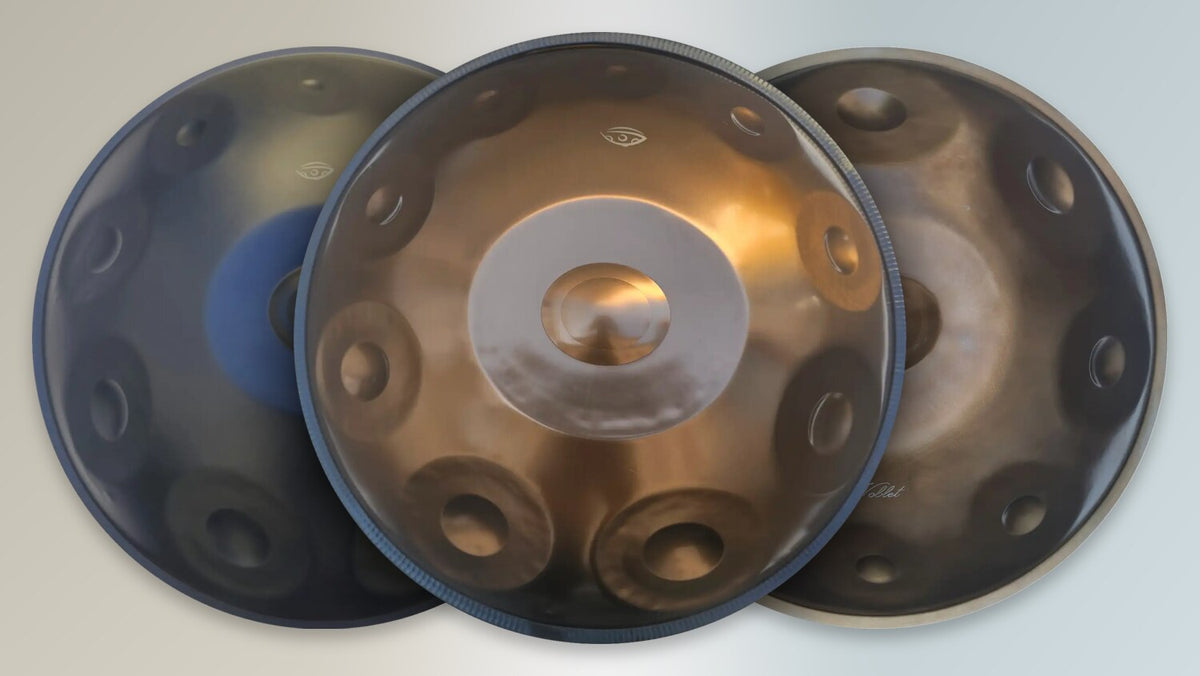
Guide to handpan materials: nitrided vs stainless steel vs Ember Steel
Compare handpan materials. Learn how nitrided steel, stainless steel, and Ember Steel affect sustain, rust resistance, and sound with Sound-Sculpture.

The ultimate guide to travelling safely with your handpan
Learn how to travel safely with your handpan. Discover airline carry-on tips, flight hard cases, temperature protection, and humidity care with Sound-Sculpture.
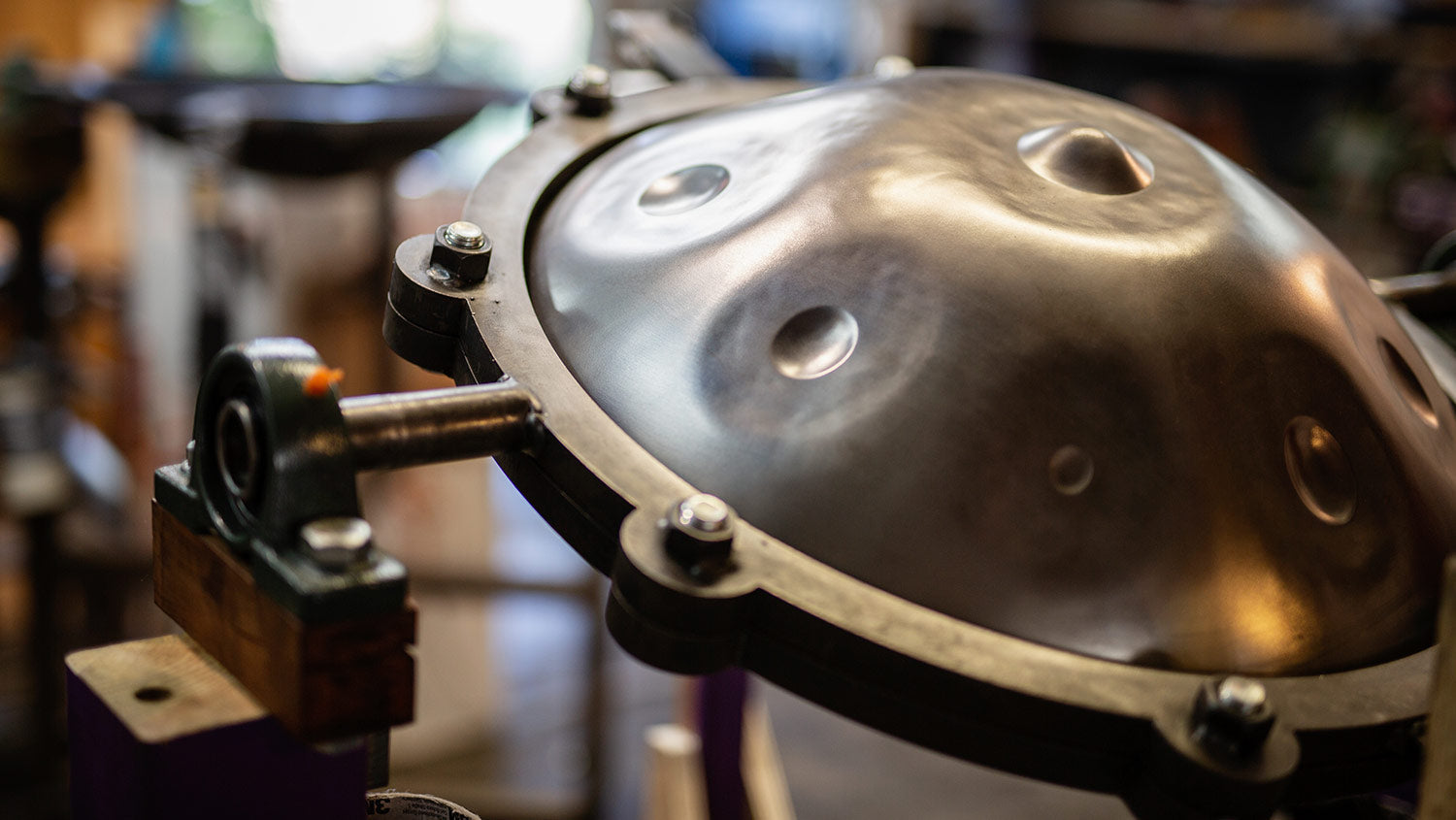
Handpan tuning: how does it work?
Discover how a handpan is tuned: expert techniques, high quality tools and all you need to understand how your instrument has been built or can be restored!

Handpan musicians: 10 artists redefining the instrument
Discover 10 handpan musicians pushing the boundaries of this remarkable instrument, from viral pioneers to UK street performers shaping the modern scene!