
The complete guide to 432 Hz vs 440 Hz tuning
432 Hz vs 440 Hz: compare sound, history, science and handpan tuning to choose the right frequency for your playing style.

Table of contents
Few tuning debates create as much fascination as 432 Hz vs 440 Hz. Millions of listeners claim that 432 Hz sounds warmer, softer and more natural, especially in meditation, yoga and sound healing music. At the same time, A=440 Hz has been the global reference pitch for modern Western music since the mid-20th century, used by most orchestras, tuners, digital instruments and recording studios.
So, who is right? The answer is more nuanced than the internet often suggests. There is a real acoustic difference between 432 Hz and 440 Hz, but many of the more dramatic claims around “universal harmony” or harmful 440 Hz frequencies are not supported by strong evidence. Still, musical experience is not only about laboratory measurements. The way a tuning feels to a player or listener can matter, especially with deeply resonant instruments such as the handpan.
This guide explains what 432 Hz and 440 Hz tuning actually mean, how A=440 Hz became standard, whether listeners can hear the difference, what science currently says, and how handpan players can choose the right tuning.
What is 432 Hz and 440 Hz tuning?
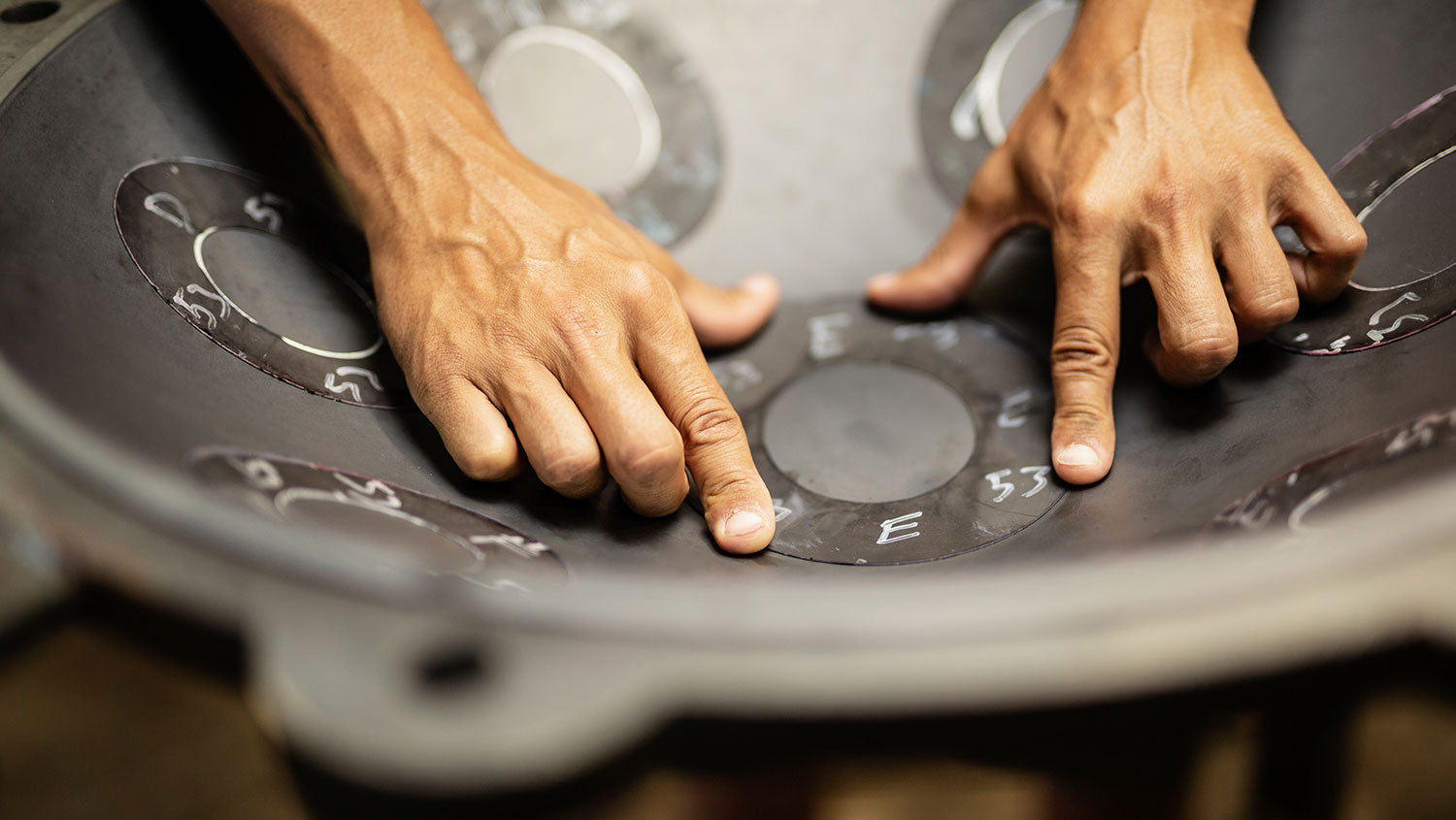
Before comparing 432 Hz and 440 Hz, it is important to understand that these numbers do not describe every note in a piece of music. They refer to the tuning reference used for one specific note: A above middle C, often written as A4.
Once this reference note is set, the rest of the instrument is tuned in relation to it. Changing A4 from 440 Hz to 432 Hz lowers the entire tuning system slightly. The musical relationships between notes remain the same, but the overall pitch is a little lower.
What “A=440 Hz” actually means
A=440 Hz means that the A above middle C vibrates at 440 cycles per second. This pitch is used as the standard reference for most modern Western music, from orchestras and pianos to electronic tuners and digital audio software. It is also standardised by the International Organization for Standardization with the ISO 16:1975.
In practical terms, A=440 Hz gives musicians a shared tuning language. If a pianist, violinist, guitarist and handpan player all use A=440 Hz, they can usually play together without pitch conflicts, assuming their instruments are otherwise correctly tuned.
What changes when you tune to 432 Hz
When music is tuned to A=432 Hz, the same A note vibrates at 432 cycles per second instead of 440. That means every note becomes slightly lower in pitch. The difference is not huge, but it is noticeable in direct comparison for some listeners.
Many people describe 432 Hz as warmer, calmer or more rounded. Others hear the difference as simply lower, without any special emotional quality. The change is subtle: it does not transform the melody, harmony or rhythm of a piece. It mainly shifts the overall tonal character.
A brief history of concert pitch: from chaos to A=440 Hz
A common misconception is that music was once universally tuned to 432 Hz before being deliberately changed to 440 Hz. Historically, that is not accurate. Before modern standardisation, pitch varied widely from country to country, city to city and even between individual orchestras.
A=440 Hz became an international reference because musicians, broadcasters and instrument makers needed consistency. It was not the only pitch ever used, and it was not adopted overnight.
Why there was no single pitch before the 20th century
Before the 20th century, concert pitch was far from standard. Different regions used different reference pitches, often depending on local tradition, instrument design and performance context. Historical pitch levels could range from lower baroque standards around 415 Hz to much higher pitches around 466 Hz.
This meant that a piece performed in one city could sound slightly higher or lower than the same piece performed elsewhere. For singers, instrument makers and travelling musicians, this lack of consistency created practical problems.
How A=440 Hz became the international standard
The move towards A=440 Hz was gradual. A key moment came in 1939, when an international conference in London supported A=440 Hz as a standard pitch. The International Organization for Standardization later adopted it in 1955 as Recommendation R 16, before ISO 16 was formalised in 1975.
This timeline is important because it helps dispel a persistent conspiracy theory that A=440 Hz was imposed for sinister political reasons. Fact-checking and historical analysis have found no reliable evidence for the popular claim that 440 Hz was introduced by Nazi propaganda minister Joseph Goebbels.
Can you actually hear the difference between 432 Hz and 440 Hz?
Yes, some people can hear the difference between 432 Hz and 440 Hz, especially in a direct side-by-side comparison. However, the difference is usually subtle. It is easier to notice when the same recording is played in both tunings, one after the other, than when listening casually.
The more difficult question is not whether the pitch difference exists, but whether it has a consistent emotional or physical effect on listeners.

Side-by-Side listening: what most people notice
When comparing the two tunings directly, listeners often describe 440 Hz as a little brighter or more direct, while 432 Hz may feel slightly lower, softer or warmer. On an instrument rich in overtones, such as a handpan, that lower pitch can change how the resonance feels in the room.
However, these descriptions are not universal. Some listeners strongly prefer 432 Hz. Others prefer 440 Hz. Many notice very little difference unless they are actively listening for it.
Why perception is often subjective
Musical perception is influenced by expectation, listening environment, volume, speaker quality, emotional state and personal taste. If someone is told that 432 Hz is more relaxing before listening, they may be more likely to experience it that way.
This does not mean their experience is fake. It simply means that music listening is subjective. A tuning can feel meaningful to a listener even when scientific explanations for that feeling remain uncertain.
The science behind 432 Hz vs 440 Hz: what the research actually says
The scientific evidence around 432 Hz and 440 Hz is still limited. Some studies have explored possible effects on heart rate, anxiety or relaxation, but the number of participants is often small and the results should be treated carefully.
The most balanced position is this: there are measurable acoustic differences between the two tunings, but broad claims about guaranteed healing effects are not currently proven.
Acoustic and mathematical properties of each frequency
The acoustic difference between 432 Hz and 440 Hz is an 8 Hz shift in the reference A. Because the whole tuning system moves with it, every note becomes slightly lower when tuned to 432 Hz.
Some supporters argue that 432 Hz has more natural mathematical relationships. However, many of these arguments rely on selective numerology rather than robust acoustics. In equal temperament, which is used for most modern instruments, all notes are mathematically calculated from the chosen reference pitch. Changing A from 440 to 432 changes the starting point, but it does not automatically make the whole system more “natural”.
What the double-blind studies found
A 2019 double-blind crossover pilot study compared music tuned to 440 Hz and 432 Hz. It found that 432 Hz music was associated with a greater decrease in heart rate, although the authors noted that the experiment should be repeated with larger samples and more clinical parameters.
Other studies have explored 432 Hz music in contexts such as sleep, anxiety and stress, including pilot or small-scale designs. These findings are interesting, but they do not create a scientific consensus. The current evidence is preliminary, and it would be misleading to claim that 432 Hz has proven health benefits for everyone.
Spiritual and cultural claims: separating experience from myth
The 432 Hz debate is not only technical. It is also cultural. Many people connect 432 Hz with meditation, sound baths, yoga, spiritual practice and emotional healing. For contemplative music, the lower pitch can feel more immersive and intimate.
At the same time, some online claims go much further, suggesting that 432 Hz is mathematically built into the universe or that ancient civilisations universally tuned to it. These claims should be treated with caution.
Why 432 Hz resonates with meditation and sound healing communities
432 Hz is popular in meditation and sound healing because many listeners perceive it as gentle, grounded and calming. For instruments with long sustain, such as handpans, the slightly lower tuning can support a warm and spacious sound.
This is especially relevant for solo handpan players. If your main goal is personal relaxation, intuitive playing or meditative soundscapes, a 432 Hz handpan may feel inspiring. The value here is experiential: how the instrument makes you feel when you play it.
The numerological arguments and why they don’t hold up
Some 432 Hz arguments are based on numerology, ancient architecture, planetary vibration or claims about sacred geometry. These ideas can be meaningful within spiritual communities, but they are not the same as scientific proof.
Fact-checkers and music writers have challenged many of the historical claims around 432 Hz, especially those suggesting that A=440 Hz was deliberately imposed for harmful reasons. A respectful approach is to separate personal experience from universal claims. You may prefer 432 Hz without needing to prove that it is objectively superior!
432 Hz vs 440 Hz for handpan players: a practical buyer’s guide
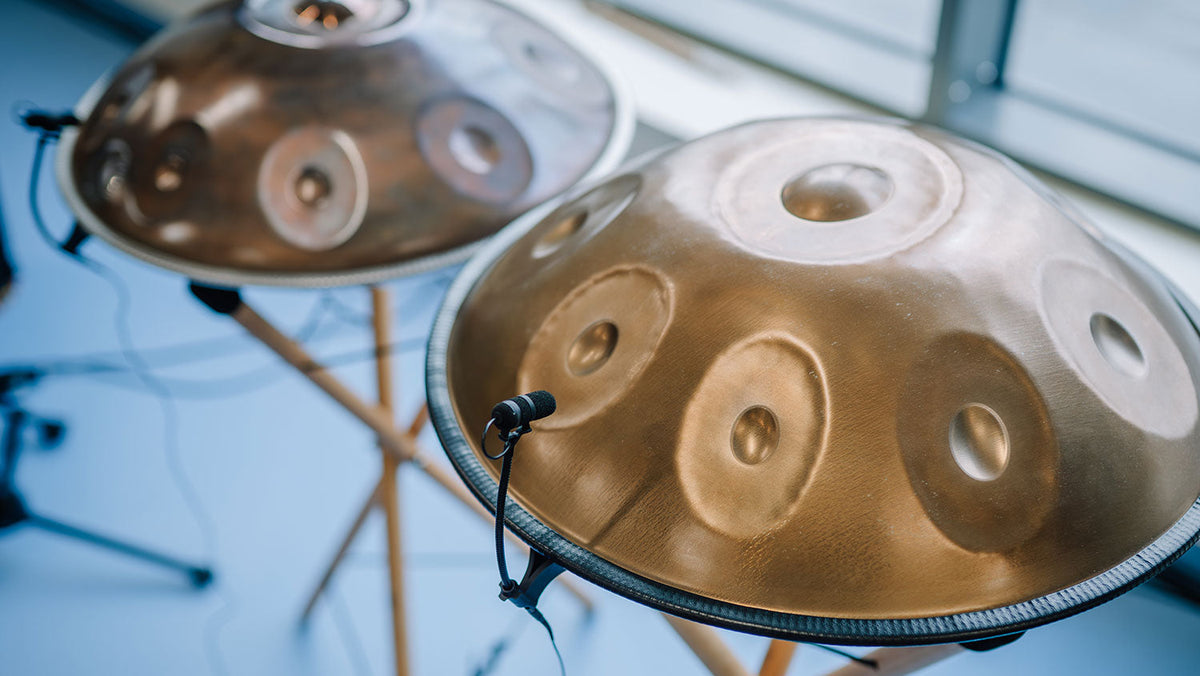
For handpan players, the 432 Hz vs 440 Hz debate becomes practical. This is not just about theory; it affects which handpan you buy, who you can play with and how your handpan feels in different musical settings.
Most handpans are commonly made in scales such as D minor and are often tuned to 440 Hz. However, some makers offer 432 Hz tuning on request.
Does handpan tuning (432 vs 440 Hz) affect the playing experience?
Yes, but subtly. A 432 Hz handpan may feel slightly deeper and warmer because the whole instrument is pitched lower. Its overtone ring can feel softer, especially in a quiet room or meditative context.
The main practical issue is compatibility. If you plan to play with guitarists, pianists, orchestras, digital backing tracks or other handpan players, 440 Hz is usually the safer choice. If you mainly play solo, record ambient music or use the instrument for relaxation, 432 Hz can be a beautiful option.
Is 432 Hz better for relaxation or meditation music?
Many players and listeners feel that 432 Hz works well for relaxation and meditation. It can sound more grounded, particularly on resonant instruments where sustain and overtones are central to the experience.
However, this does not mean 432 Hz is automatically better. A beautifully made 440 Hz handpan can be deeply calming, while a poorly chosen 432 Hz instrument may not suit your taste. Scale, material, sustain, tuning quality and playing style all matter.
How to choose the right tuning when buying a handpan
Choose 440 Hz if you want maximum flexibility, ensemble compatibility and access to the widest range of instruments. Choose 432 Hz if you mainly play solo, prefer a slightly lower tonal centre or feel especially drawn to meditation and sound healing contexts.
The best choice is to listen before deciding. Sound-Sculpture provides demo videos, personalised consultation and the possibility to explore handpans through partner showrooms or rental options. Trying an instrument, even briefly, can tell you more than any online debate.
Can You Retune a Handpan from 440 Hz to 432 Hz?
In theory, a handpan can sometimes be retuned, but moving an entire instrument from 440 Hz to 432 Hz is not a simple adjustment. It requires specialist work and may not always be advisable, depending on the instrument’s construction, material and condition.
If you know you want 432 Hz, it is better to buy a handpan made or ordered in that tuning from the start. Before attempting any retuning, speak to a qualified handpan specialist or contact Sound-Sculpture for guidance.
FAQ
Music was not universally changed from 432 Hz to 440 Hz. Before standardisation, pitch varied widely across Europe and beyond. A=440 Hz became a practical international reference through standardisation efforts, including the 1939 London conference and later ISO adoption.
432 Hz is not objectively better than 440 Hz. Some listeners find it warmer or more relaxing, while others prefer the clarity and compatibility of 440 Hz. For handpan players, the best choice depends on whether you play solo, with others, for meditation or in more conventional musical settings.
444 Hz tuning sets A4 slightly higher than 440 Hz. Some musicians use it for a brighter or more energetic sound, and some European orchestras tune above 440 Hz. It is less common than 440 Hz and less discussed than 432 Hz in handpan communities.
Yes, some handpans can be made in 432 Hz tuning. It is usually best to choose this option when buying the instrument rather than trying to convert a finished 440 Hz handpan later. Sound-Sculpture can help you compare available scales, materials and tuning options. Contact us!
There is no strong evidence that 440 Hz is harmful. Some studies have compared 432 Hz and 440 Hz music for relaxation-related outcomes, but the evidence remains preliminary and does not prove that 440 Hz has negative health effects.

About the author

Founder and managing director of Sound-Sculpture, handpan expert
Related articles
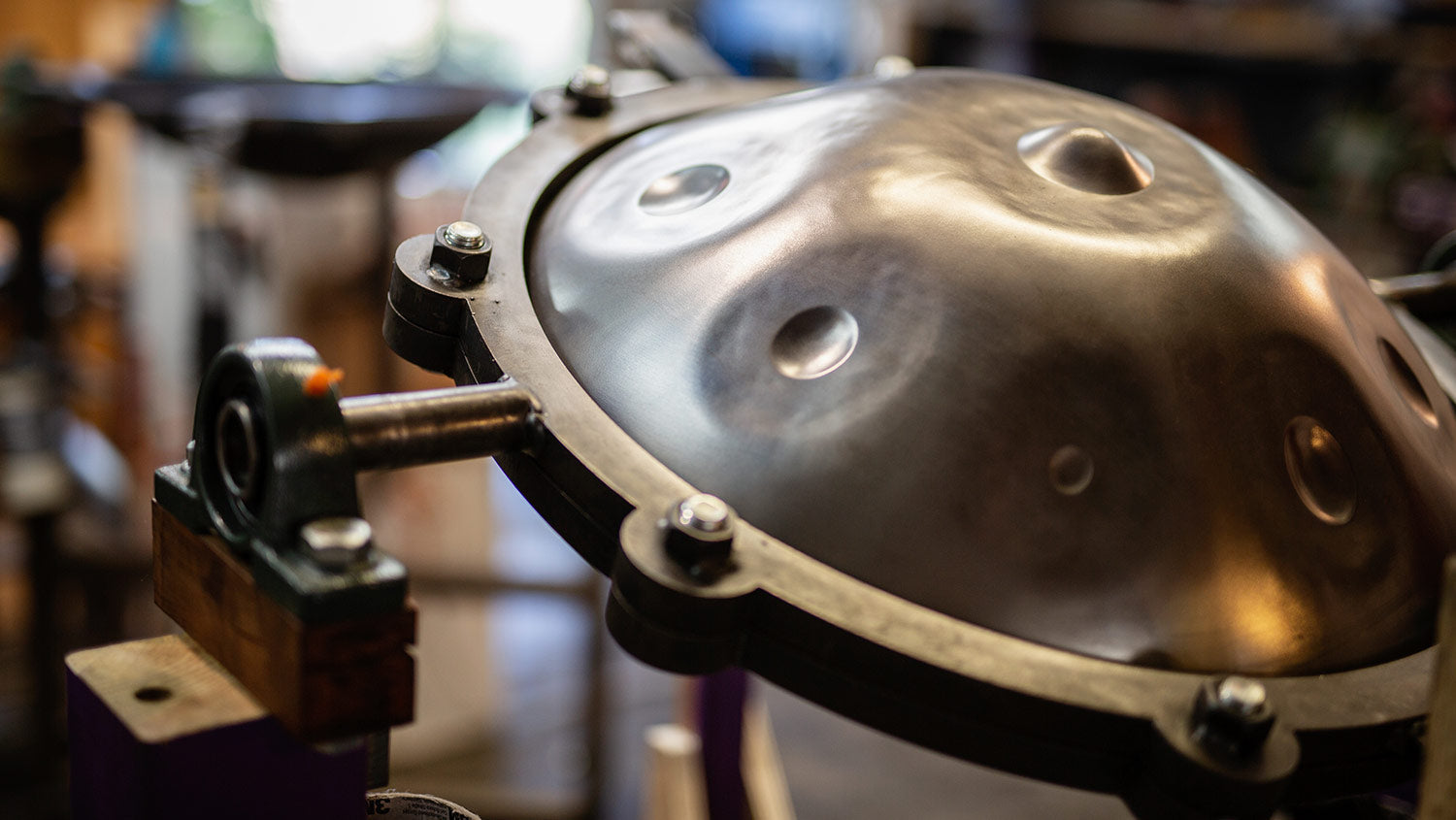
Handpan tuning: how does it work?
Discover how a handpan is tuned: expert techniques, high quality tools and all you need to understand how your instrument has been built or can be restored!
Handpan musicians: 10 artists redefining the instrument
Discover 10 handpan musicians pushing the boundaries of this remarkable instrument, from viral pioneers to UK street performers shaping the modern scene!
Letter notation vs Solfege: a guide for the modern music
Confused by Do-Re-Mi vs A-B-C? Discover the differences between solfege and letters, their history, and why handpan players prefer one over the other.
Major scale vs minor scale: the complete beginner's guide
A guide for beginners on major scale vs minor scale: learn how their patterns work and which one suits your handpan playing style.